The shooting of an unarmed teenager, that took place on August 9, led
to many disputes in Ferguson. This is what Patricia Smith wrote about in her article, Outrage in Ferguson in the Upfront Magazine. Her article was about how Officer Darren Wilson, had stopped black 18-year-old Michael Brown and his friend for walking in the middle of the street. Blocking traffic, witnesses say that Wilson shot Brown multiple times as he got out of his car. This is set off many protests and riots full of angry people who were heavily affected by this shooting. The author, Patricia Smith, wanted her readers to know how people in Ferguson feel about this shooting, police brutality and how racism played as a factor.
In the article, Smith says that the shooting reinforces the feeling that the
government and police weren't looking out for them. Patrice McHaskell, a nursery school teacher in Ferguson, says, '' They're just outraged, and they're tired of the police messing with them . . . It brought out all the anger and tension everybody's been holding in.'' This suggests that things like these were happening more than once. And its true, another unarmed black teen, Trayvon Martin was killed in Florida by a neighborhood watch volunteer. The person was later tried and acquitted of wrongdoing. In Ferguson, many people believe that its racism that was causing all the havoc. In the article, it says that black people who were currently living there, felt as if they were ''unfairly viewed with suspicion by police . . . and felt persistent discrimination''. Many of the people were often pulled over when they were driving their cars, and when the asked the police for a reason why, they didn't get any. Because this was so common and had happened so many times, people now call it DWB or Driving While Black. Michael Brown and Trayvon Martin are just two examples of the millions of black teenagers that get killed and affected because of race each year.
This type of social injustice, more specifically, police brutality is one of the topics that the author of this article wants us to learn. As said in her article, many people are killed just because of their skin color. Although, the author of this article wasn't exactly bias towards her writing, she still made it clear on the topic she wanted her readers to know about. She wants us to know that there are still people who make wrong and biased decisions about black people, and she tries to explain that racism and police brutality is not the answer, unlike of what was shown in the article. In the article she stated all those facts, what had happened and who had been killed. And she then elaborated on how the victims or family members of these victims reacted with this event, showing how awful it can be for someone's life to be taken away like that because of someone else's emotions toward black people.
After reading this, it made me realize that, although slavery is banned
and African Americans have more rights than they had previously, people are still being biased and racist about them. It made me realize that this type of police brutality can happen almost anywhere. It also made me realize that so many people have to go through this everyday (which is in a form of bullying), so many people get teased at, laughed at, and arrested for something they can't have control over, their skin color. This article also made me question about our society in Brooklyn. Are there people being bullied because of their skin color? Do people get arrested because of that? Does anything like that happen in our school? As you can see, this article made me question and acknowledge things at the same time, from social issues to events that take place in our society.
Tuesday, November 18, 2014

Tuesday, November 11, 2014
Trip to the Museum
Our trip to the Museum of the City of New York was a fun and
exciting trip. After we went to the activist exhibit, I realized how many events are taking place around the world. Events like riots and marches that are caused because of social issues today, like women's inequality, gay rights, and bicycle protests.
These protests made me realize that one single protest, like the riot in bar that were full of gay people, can stir up debates on equality throughout the nation. That one riot where the gay people had finally had enough, started to take action, and fight against the police that wanted to arrest them. Because of that, alot more gay people are standing up for who they are. This made me realize how much one riot can affect so many people. Going on this trip also made me aware of other protests going on in New York, like the bicycle protest. I didn't even know that they existed. Activists, like the cyclists, try so hard to prove their point in society. Those cyclists had to dress up as clowns to finally get the society's attention on them. Overall, I thought this trip was very interesting and inspiring. It represents what New York is made up, and how much strength we have.

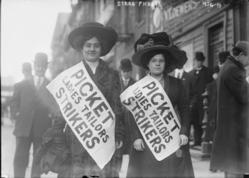

exciting trip. After we went to the activist exhibit, I realized how many events are taking place around the world. Events like riots and marches that are caused because of social issues today, like women's inequality, gay rights, and bicycle protests.
These protests made me realize that one single protest, like the riot in bar that were full of gay people, can stir up debates on equality throughout the nation. That one riot where the gay people had finally had enough, started to take action, and fight against the police that wanted to arrest them. Because of that, alot more gay people are standing up for who they are. This made me realize how much one riot can affect so many people. Going on this trip also made me aware of other protests going on in New York, like the bicycle protest. I didn't even know that they existed. Activists, like the cyclists, try so hard to prove their point in society. Those cyclists had to dress up as clowns to finally get the society's attention on them. Overall, I thought this trip was very interesting and inspiring. It represents what New York is made up, and how much strength we have.
Thursday, November 6, 2014
Reading Response on The Catcher in the Rye
In the real world, most people from rich families don't flunk school,
or have a desire to kill phonies. But, 16-year-old Holden Caulfield, from the book, The Catcher in the Rye by J.D. Salinger, on the other hand, is a different story. This book is about Holden's life after getting expelled from from his prep school, Pencey. Because of constant pressure, Holden gets into a fight with his roommate, and leaves Pencey two days early to visit New York. Throughout his days on New York, Holden starts to develop strong cynical views about his constant wry observations on what he encounters, from teachers and bartenders to phonies and random people on the street. Although he had negative views about phonies in the beginning, those views changed into positive ones.
In the beginning of the book, Holden's perspective about phonies
was usually negative. For example, one of Holden's reasons on why he left Elkton Hills was because there were too many phonies. In fact he said, ''One of the biggest reasons I left Elkton Hills was because I was surrounded by phonies.'' This shows how phonies really affect him, and how much he despises them. He left a whole entire school only because it was filled with phonies. Also, when Phoebe, Holden's younger sister, asked him to give her a reason why he flunked Pencey, Holden said, ''Oh, God Phoebe, don't ask me. I'm sick of everybody asking me that. It was one of the worst schools I ever went to. It was full of phonies. And mean guys. You never saw so many mean guys in your life.'' This just adds to the fact that the phonies were the one and only reason why he hated Pencey. Holden also can't seem to control his anger for phonies. For example, when Holden was talking to Sally about his prep school, he says, ''I hate living in New York and all . . . and being introduced to phony guys . . . You ought to go to a boys' school sometime. Try it sometime, its full of phonies, and all you have to do is study so that you can learn enough to be smart enough to be able to buy a goddamn Cadillac someday, and have to make believe you give a damn if the football team loses, and all you do is talk about girls and liquor and sex all day, and everybody sticks together in these dirty little goddamn cliques.'' As he was saying this, Sally kept interrupting him and telling him not to yell at her, which in the text, he replies that he wasn't. This shows that Holden can't control his anger for phonies. His voice seems to get louder and louder and he gets more and more frustrated when he's talking about them. These examples show Holden's hatred for phonies that appeared in the beginning of the book; he hated talking about them, he hated seeing them, and he hated being near them.
However, towards the end of the book, his negative views about
these phonies slightly start to alter. For example, Holden described his roommate, Stradlater, as a phony. But when Ackley (Holden's other roommate) started to say that Stradlater was such a ''conceited sonuvabitch'', Holden ended up trying to convince Ackley that Stradlater was a good guy. In fact, he said, ''He's conceited but he's generous for some things he really is. Look suppose, for instance, Stradlater was wearing a tie or something that you liked. Say he had a tie on that you liked a helluva lot . . .You know what he'd do? He'd take it off and give it to you. He really would.'' This shows that Holden still had a soft spot for phonies. He defended them while one was being criticized. Another example is that, at the end of the book, Holden says, ''I sort of miss everybody I told about. Even old Stradlater and Ackley, for instance. I think I even miss that goddamn Maurice. It's funny. Don't tell anybody anything. If you do, you start missing everybody.'' This is where Holden learned his lesson; that phonies weren't that bad. This shows that while he was talking how phonies were horrible and conceited, it was only the end when when he started to realize that he actually missed them, and the fact that they were really the only friends he had.
As you can see, Holden's views and attitude towards phonies
changed. He started from thinking that phonies were the worst things on Earth, and he ended up missing most of them. All in all, I thought this was a great book for kids to read, and a great way to show them a lesson where Holden realized; don't hate too much. Also, this book shows young readers what some of the older people have to deal with in their lives; depression and hatred, and this book shows why you shouldn't hate everyone you think is a phony.
or have a desire to kill phonies. But, 16-year-old Holden Caulfield, from the book, The Catcher in the Rye by J.D. Salinger, on the other hand, is a different story. This book is about Holden's life after getting expelled from from his prep school, Pencey. Because of constant pressure, Holden gets into a fight with his roommate, and leaves Pencey two days early to visit New York. Throughout his days on New York, Holden starts to develop strong cynical views about his constant wry observations on what he encounters, from teachers and bartenders to phonies and random people on the street. Although he had negative views about phonies in the beginning, those views changed into positive ones.
In the beginning of the book, Holden's perspective about phonies
was usually negative. For example, one of Holden's reasons on why he left Elkton Hills was because there were too many phonies. In fact he said, ''One of the biggest reasons I left Elkton Hills was because I was surrounded by phonies.'' This shows how phonies really affect him, and how much he despises them. He left a whole entire school only because it was filled with phonies. Also, when Phoebe, Holden's younger sister, asked him to give her a reason why he flunked Pencey, Holden said, ''Oh, God Phoebe, don't ask me. I'm sick of everybody asking me that. It was one of the worst schools I ever went to. It was full of phonies. And mean guys. You never saw so many mean guys in your life.'' This just adds to the fact that the phonies were the one and only reason why he hated Pencey. Holden also can't seem to control his anger for phonies. For example, when Holden was talking to Sally about his prep school, he says, ''I hate living in New York and all . . . and being introduced to phony guys . . . You ought to go to a boys' school sometime. Try it sometime, its full of phonies, and all you have to do is study so that you can learn enough to be smart enough to be able to buy a goddamn Cadillac someday, and have to make believe you give a damn if the football team loses, and all you do is talk about girls and liquor and sex all day, and everybody sticks together in these dirty little goddamn cliques.'' As he was saying this, Sally kept interrupting him and telling him not to yell at her, which in the text, he replies that he wasn't. This shows that Holden can't control his anger for phonies. His voice seems to get louder and louder and he gets more and more frustrated when he's talking about them. These examples show Holden's hatred for phonies that appeared in the beginning of the book; he hated talking about them, he hated seeing them, and he hated being near them.
However, towards the end of the book, his negative views about
these phonies slightly start to alter. For example, Holden described his roommate, Stradlater, as a phony. But when Ackley (Holden's other roommate) started to say that Stradlater was such a ''conceited sonuvabitch'', Holden ended up trying to convince Ackley that Stradlater was a good guy. In fact, he said, ''He's conceited but he's generous for some things he really is. Look suppose, for instance, Stradlater was wearing a tie or something that you liked. Say he had a tie on that you liked a helluva lot . . .You know what he'd do? He'd take it off and give it to you. He really would.'' This shows that Holden still had a soft spot for phonies. He defended them while one was being criticized. Another example is that, at the end of the book, Holden says, ''I sort of miss everybody I told about. Even old Stradlater and Ackley, for instance. I think I even miss that goddamn Maurice. It's funny. Don't tell anybody anything. If you do, you start missing everybody.'' This is where Holden learned his lesson; that phonies weren't that bad. This shows that while he was talking how phonies were horrible and conceited, it was only the end when when he started to realize that he actually missed them, and the fact that they were really the only friends he had.
As you can see, Holden's views and attitude towards phonies
changed. He started from thinking that phonies were the worst things on Earth, and he ended up missing most of them. All in all, I thought this was a great book for kids to read, and a great way to show them a lesson where Holden realized; don't hate too much. Also, this book shows young readers what some of the older people have to deal with in their lives; depression and hatred, and this book shows why you shouldn't hate everyone you think is a phony.
Sunday, November 2, 2014
Revised Reading Response for In A Glass Grimmly
Most people wouldn't risk their lives for beauty or popularity.
However, this situation is very different with Jack and Jill in the book, In A Glass Grimmly, by Adam Gidwitz. This book is the story of two cousins, Jack and Jill. Jack is constantly bullied by the popular crowd he worships, and Jill wants to be beautiful as her vain mother wants her to be. In this book, Jack and Jill go through a violent journey to retrieve the ancient Seeing Glass, which they swore their lives on, that they would get this in hopes of what they wanted. Jack wanted to be popular and Jill wanted to be beautiful. Throughout this book Jill has changed from being vain, shallow, and careless to wise and selfless because of her realization of what she really wants.
In the beginning of the book, Jill acted very selfish.
For example, she thought she wanted to be exactly like her mom; beautiful. She would always take her self centered mother's advice, but that advice is always about beauty or makeup tips. Jill's mother made Jill put her feet in freezing cold water. When Jill asked why she had to do this, her mother had simply said ''beautiful women have the softest feet'', and Jill would nod and try not to shiver loudly. This shows that Jill would do anything to become pretty. Jill is also very careless, she doesn't care about the people around her, nor does she feel any sympathy for them. For example, when Jill and her mother heard a poor beggar crying for bread, Jill's mother insulted him about the way he smelled, and Jill, out of all things, giggled. Jill can very thoughtless sometimes too. She had swore on her life that she would find the one and only powerful Seeing Glass, and the only reason that she made such a promise is because the old witch had said that if she did find this Seeing Glass, she would make Jill the most beautiful girl in the kingdom. But more importantly, Jill had to go with Jack, climb a beanstalk, slay giants, do so many other dangerous things that are definitely not suitable for children like them. Also, Jill is very shallow. For example, when Jill comes face to face with a mermaid, she immediately trusts the mermaid just because the mermaid was ''so beautiful and such a precious thing.'' But later, she finds out that the mermaid had lied to her from day one, and did this so she could kill Jill, just like how she killed the fisherman's daughter.
However, this situation is very different with Jack and Jill in the book, In A Glass Grimmly, by Adam Gidwitz. This book is the story of two cousins, Jack and Jill. Jack is constantly bullied by the popular crowd he worships, and Jill wants to be beautiful as her vain mother wants her to be. In this book, Jack and Jill go through a violent journey to retrieve the ancient Seeing Glass, which they swore their lives on, that they would get this in hopes of what they wanted. Jack wanted to be popular and Jill wanted to be beautiful. Throughout this book Jill has changed from being vain, shallow, and careless to wise and selfless because of her realization of what she really wants.
In the beginning of the book, Jill acted very selfish.
For example, she thought she wanted to be exactly like her mom; beautiful. She would always take her self centered mother's advice, but that advice is always about beauty or makeup tips. Jill's mother made Jill put her feet in freezing cold water. When Jill asked why she had to do this, her mother had simply said ''beautiful women have the softest feet'', and Jill would nod and try not to shiver loudly. This shows that Jill would do anything to become pretty. Jill is also very careless, she doesn't care about the people around her, nor does she feel any sympathy for them. For example, when Jill and her mother heard a poor beggar crying for bread, Jill's mother insulted him about the way he smelled, and Jill, out of all things, giggled. Jill can very thoughtless sometimes too. She had swore on her life that she would find the one and only powerful Seeing Glass, and the only reason that she made such a promise is because the old witch had said that if she did find this Seeing Glass, she would make Jill the most beautiful girl in the kingdom. But more importantly, Jill had to go with Jack, climb a beanstalk, slay giants, do so many other dangerous things that are definitely not suitable for children like them. Also, Jill is very shallow. For example, when Jill comes face to face with a mermaid, she immediately trusts the mermaid just because the mermaid was ''so beautiful and such a precious thing.'' But later, she finds out that the mermaid had lied to her from day one, and did this so she could kill Jill, just like how she killed the fisherman's daughter.
Although Jill acted very selfish in the beginning of the book,
she begins to show signs of maturity at the end. For example, when Jill was being kidnapped by the goblins, she was surprisingly bored with them when they were telling her how beautiful she is, instead she was focusing on the silk bonds that were tied to her hands. In the book it said, ''Jill did not care what they thought of her. Which she found very surprising. Because at long last, Jill was being admired- worshipped- for her beauty. Just as she always wanted. And, it turned out, she did not like it all.'' This shows that Jill finally decided to focus on her and Jack's lives instead of filling herself with pride every time a goblin spoke. That was probably why she was focusing on the silk bonds instead of them. Another example that supports this is that when Jill was reunited with her mother. While her mother was busy admiring a new shade of eye shadow, Jill sent a silver hairbrush crashing into a large silver mirror, which shattered it into many pieces, and with that, Jill had screamed at her mother saying, ''I don't care! I don't care what you think! I don't care! You stare at the mirror all day long and you don't even see! You don't even see! '' This shows how much confidence Jill had gained to actually yell at her mother. A final example that supports this is when Jack and Jill had run away. They would both sleep outside, both were very dirty and muddy. And they didn't care about how they looked or smelled. Other kids would throw rocks at them, but Jack and Jill paid no attention to them.
As you can see, Jill changed because she finally realized what was more important; their lives and how they were going to spend it. Basically anything but beauty. Overall, I thought this was a great book. It teaches great lessons, including the one Jill had learned; beauty isn't everything. This book also shows how much people can change. Jill had learned so much throughout her adventures, including that lesson, and that lesson caused her to be the person she is today.
Tuesday, October 14, 2014
Symbolism Synthesis Page
Synthesis Page for The Catcher in the Rye by J. D. Salinger
Holden's Red Hunting Hat- Holden's hat symbolizes his uniqueness and individuality throughout the book. In the beginning of the book, you could tell that Holden describes this hat as queer and outlandish, but he wears it anyway because it was better than being '' a stuck up depressing goddamn phony''. In the book it says, ''I took my red hunting hat out of my pocket and put it on- I didn't give damn how I looked.'' (page 99).This shows that Holden likes being himself, despite of what others may think about him.
Thesis- There are many symbols in this book that shape Holden's personality.
Holden's Red Hunting Hat- Holden's hat symbolizes his uniqueness and individuality throughout the book. In the beginning of the book, you could tell that Holden describes this hat as queer and outlandish, but he wears it anyway because it was better than being '' a stuck up depressing goddamn phony''. In the book it says, ''I took my red hunting hat out of my pocket and put it on- I didn't give damn how I looked.'' (page 99).This shows that Holden likes being himself, despite of what others may think about him.
The Museum of Natural History- The museum in this book represents change. When Holden visited the Museum of Natural History while he was in New York, he realized that it wasn't possible for people to be the same person they were a five years ago. Even if it was a physical, mental, or a small change, you still changed. In the book he said, ''You could go there a thousand times, and that Eskimo would still be finished catching those two fish, the birds would still be on their way South, and the deers would still be drinking out of the water hole, with their pretty antlers, and their pretty skinny legs. Nobody'd be different. The only thing that would be different would be you.'' (page 135) And Holden was right, in the book, he mentions that he changed too.
The Ducks in the Central Park Lagoon- In the very beginning of the book, Holden was eager to know the answer to a specific question; ''Where do all the ducks go when the lake freezes over? I mean . . . does some guy go over there every winter and gets them, or . . .'' This would symbolize curiosity. Holden doesn't seem to stop wondering about this. When Holden got in a cab, he even asked the driver if he knew what happens to them. But the since the driver seemed to be ''touchy'', Holden let it slide. But when Holden got into another cab, he asked the same question. It seemed that his curiosity revealed a more genuine and youthful side in him. Almost like how little kids would usually ask these types of questions.
Ernie the Piano Player- Ernie is a piano player at this bar. He seems to symbolize ''phonies and wasteful people.'' He is an example of someone who wastes his talent to show off instead of using it for real art and potential. At the setting of the bar, Holden says that Ernie wouldn't talk to you unless you were some big hot-shot. In fact, he said, ''I'm not too sure what the name of the song was that he was playing when I came in, but whatever it was, he was really stinking it up. He was putting all these dumb, show-offy ripples in the high notes, and alot of other tricky stuff that gives me a pain in the ass''. (page 84). This also contributes to the fact that Holden really doesn't like phonies.
Allie's Baseball Glove- Allie was Holden's younger brother, and he died of leukemia. His baseball glove seems to symbolize Holden's never-ending love for him. Allie had written poems on glove in green ink so he had something to read during baseball practice so he wouldn't be bored. Holden really liked Allie because, first of all, he wasn't a phony. In fact, Holden states that he was really kind and thoughtful too, he idealizes him. And after Holden found out that Allie had died, he broke all the windows in the garage and had to hospitalized. This proves that Allie meant alot to Holden. But also, Holden never exactly shows his love for these things. The only person he showed this glove to was Jane Gallagher, his extremely reliable friend.
Tuesday, September 30, 2014
Reading Response for In a Glass Grimmly by Adam Gidwitz
Have you ever wanted something? Something that you wanted
so badly that you would do anything to get it? Even if it cost you your life? Most people would probably say no, life is way too precious. However, this situation is very different with Jack and Jill in the book, In A Glass Grimmly, by Adam Gidwitz. This book is the story of two cousins, Jack and Jill. Jack is constantly bullied by the popular crowd he worships, and Jill wants to beautiful as her vain mother wants her to be. In this book, Jack and Jill go through a violent journey to retrieve the ancient Seeing Glass, which they swore their lives on, that they would get this in hopes of what they wanted.. Jack wanted to be popular and Jill wanted to be beautiful. Throughout this book Jill has changed from being vain, shallow, and careless to caring and selfless.
In the beginning of the book, Jill wanted to be exactly like
her mom. She would always take her mother's advice, but that advice is always about beauty or makeup tips. Jill's mother made Jill put her feet in freezing cold water. When Jill asked why she had to do this, her mother had simply said ''beautiful women have the softest feet'', and Jill would nodd and try not to shiver loudly. This shows that Jill would do anything to become pretty. Jill is also very careless, she doesn't care about the people around her, nor does she feel any sympathy for them. For example, when Jill and her mother heard a poor beggar crying for bread, Jill's mother insulted him about the way he smelled, and Jill, out of all things, giggled. Jill can very careless sometimes too. She had swore on her life that she would find the one and only powerful Seeing Glass, and the only reason that she made such a promise is because the old witch had said that if she did find this Seeing Glass, she would make Jill the most beautiful girl in the kingdom.
But more importantly, Jill had to go with Jack, climb a beanstalk, slay giants, do so many other dangerous things that are definitely not suitable for children like them. Also, Jill is very shallow. For example, when Jill comes face to face with a mermaid, she immediately trusts the mermaid just because the mermaid was ''so beautiful and such a precious thing.'' But later, she finds out that the mermaid had lied to her from day one, and did this so she could kill Jill, just like how she killed the fisherman's daughter.
Although Jill acted very selfish in the beginning of the book,
she begins to show signs of maturity at the end. For example, when Jill was being kidnapped by the goblins, she was surprisingly bored with them when they were telling her how beautiful she is, instead she was focusing on the silk bonds that were tied to her hands. In the book it said, ''Jill did not care what they thought of her. Which she found very surprising. Because at long last, Jill was being admired- worshipped- for her beauty. Just as she always wanted. And, it turned out, she did not like it all.'' Another example that supports this is that when Jill was reunited with her mother. While her mother was busy admiring a new shade of eye shadow, Jill sent a silver hairbrush crashing into a large silver mirror, which shattered it into many pieces, and with that, Jill had screamed at her mother saying, ''I don't care! I don't care what you think! I don't care! You stare at the mirror all day long and you don't even see! You don't even see! '' This shows how much confidence Jill had gained to actually yell at her mother. A final example that supports this is when Jack and Jill had run away. They would both sleep outside, both were very dirty and muddy. And they didn't care about how they looked or smelled. Other kids would throw rocks at them, but Jack and Jill paid no attention to them.
Overall, I thought this was a great book. It teaches great lessons,
including the one Jill had learned. This book also shows how much people can change. Jill had learned so much throughout her adventures, which caused her to be the person she is today.
so badly that you would do anything to get it? Even if it cost you your life? Most people would probably say no, life is way too precious. However, this situation is very different with Jack and Jill in the book, In A Glass Grimmly, by Adam Gidwitz. This book is the story of two cousins, Jack and Jill. Jack is constantly bullied by the popular crowd he worships, and Jill wants to beautiful as her vain mother wants her to be. In this book, Jack and Jill go through a violent journey to retrieve the ancient Seeing Glass, which they swore their lives on, that they would get this in hopes of what they wanted.. Jack wanted to be popular and Jill wanted to be beautiful. Throughout this book Jill has changed from being vain, shallow, and careless to caring and selfless.
In the beginning of the book, Jill wanted to be exactly like
her mom. She would always take her mother's advice, but that advice is always about beauty or makeup tips. Jill's mother made Jill put her feet in freezing cold water. When Jill asked why she had to do this, her mother had simply said ''beautiful women have the softest feet'', and Jill would nodd and try not to shiver loudly. This shows that Jill would do anything to become pretty. Jill is also very careless, she doesn't care about the people around her, nor does she feel any sympathy for them. For example, when Jill and her mother heard a poor beggar crying for bread, Jill's mother insulted him about the way he smelled, and Jill, out of all things, giggled. Jill can very careless sometimes too. She had swore on her life that she would find the one and only powerful Seeing Glass, and the only reason that she made such a promise is because the old witch had said that if she did find this Seeing Glass, she would make Jill the most beautiful girl in the kingdom.
But more importantly, Jill had to go with Jack, climb a beanstalk, slay giants, do so many other dangerous things that are definitely not suitable for children like them. Also, Jill is very shallow. For example, when Jill comes face to face with a mermaid, she immediately trusts the mermaid just because the mermaid was ''so beautiful and such a precious thing.'' But later, she finds out that the mermaid had lied to her from day one, and did this so she could kill Jill, just like how she killed the fisherman's daughter.
Although Jill acted very selfish in the beginning of the book,
she begins to show signs of maturity at the end. For example, when Jill was being kidnapped by the goblins, she was surprisingly bored with them when they were telling her how beautiful she is, instead she was focusing on the silk bonds that were tied to her hands. In the book it said, ''Jill did not care what they thought of her. Which she found very surprising. Because at long last, Jill was being admired- worshipped- for her beauty. Just as she always wanted. And, it turned out, she did not like it all.'' Another example that supports this is that when Jill was reunited with her mother. While her mother was busy admiring a new shade of eye shadow, Jill sent a silver hairbrush crashing into a large silver mirror, which shattered it into many pieces, and with that, Jill had screamed at her mother saying, ''I don't care! I don't care what you think! I don't care! You stare at the mirror all day long and you don't even see! You don't even see! '' This shows how much confidence Jill had gained to actually yell at her mother. A final example that supports this is when Jack and Jill had run away. They would both sleep outside, both were very dirty and muddy. And they didn't care about how they looked or smelled. Other kids would throw rocks at them, but Jack and Jill paid no attention to them.
Overall, I thought this was a great book. It teaches great lessons,
including the one Jill had learned. This book also shows how much people can change. Jill had learned so much throughout her adventures, which caused her to be the person she is today.
Tuesday, September 16, 2014
New Kid by Tim Green- Summer Reading Response
The book, New Kid by Tim Green, tells an amazing story
of a kid who is now named Brock Nickerson. A few weeks ago his name was Tommy Rust. That's because Brock and his dad are always on the run. Some days his dad just announces that they have to move and change their name, which has gotten harder for Brock as he gets older, he's constantly fearing that he'll have to lose another friend, another potential girlfriend, and let down another baseball team. Brock has never dared to ask his mysterious and possibly dangerous father why they had to move so frequently. I find Brock and his father's relationship very unique and unlike many others.
An example that supports this idea is that Brock seems to be afraid
of his father. It even says it in the book, Brock had said, ''It wasn't hard to admit that he was afraid of his father.'' In the beginning of the book, Brock got into a fight on his first day at his new school. At the nurse's office it stated that when he heard his father's cough in the doorway to the nurse's office, he jumped right up off his cot. ''Blood pounded behind Brock's swollen face, squeezing tears from his eyes.'' this quote proves that Brock is definitely afraid to see his father's reaction to what he had done.
Another example that supports the idea of their relationship being
unique is that Brock didn't know much about his father until the end of the book. For example, in the beginning of the book, when Brock's father told Brock that he also played baseball in college, Brock had said, ''It was like a door had opened into a room he never knew existed, but just as quickly, it closed.'' Meaning that, whenever Brock's father tells something about himself, he lets the thought sink in and then just never mentions it again. In the book, you can also infer that Brock doubts his father in some serious questions. In the middle of the book, Brock had said ''Hiding in the pit of belief was the certainty that his father was killer''. Meaning that there is still a part of Brock that thinks that his father is a killer or at least dangerous. But thankfully, at the end of the book Brock's father reveals who he really is; a agent who works for the government. This explains why Brock had a feeling that he was dangerous. In the end Brock learns that his mother was in on it too, but she got killed. In the very end, Brock's father asks him if wanted to stay in his new town and achieve his dreams in becoming a baseball player or go with his father and move all over again, which Brock had promised his dad that he would never leave his side.
I think that this book is an amazing book to read. This unique
father-to-son relationship relates to so many people that have to give up their dreams for the things they love the most and knowing that they did the right thing, similar to Brock's situation. He had to give up his baseball dream in order to be with his father. In the beginning Brock wanted to do anything to stop moving and being the new kid over and over again. But now he would do anything to be with his dad.
of a kid who is now named Brock Nickerson. A few weeks ago his name was Tommy Rust. That's because Brock and his dad are always on the run. Some days his dad just announces that they have to move and change their name, which has gotten harder for Brock as he gets older, he's constantly fearing that he'll have to lose another friend, another potential girlfriend, and let down another baseball team. Brock has never dared to ask his mysterious and possibly dangerous father why they had to move so frequently. I find Brock and his father's relationship very unique and unlike many others.
An example that supports this idea is that Brock seems to be afraid
of his father. It even says it in the book, Brock had said, ''It wasn't hard to admit that he was afraid of his father.'' In the beginning of the book, Brock got into a fight on his first day at his new school. At the nurse's office it stated that when he heard his father's cough in the doorway to the nurse's office, he jumped right up off his cot. ''Blood pounded behind Brock's swollen face, squeezing tears from his eyes.'' this quote proves that Brock is definitely afraid to see his father's reaction to what he had done.
Another example that supports the idea of their relationship being
unique is that Brock didn't know much about his father until the end of the book. For example, in the beginning of the book, when Brock's father told Brock that he also played baseball in college, Brock had said, ''It was like a door had opened into a room he never knew existed, but just as quickly, it closed.'' Meaning that, whenever Brock's father tells something about himself, he lets the thought sink in and then just never mentions it again. In the book, you can also infer that Brock doubts his father in some serious questions. In the middle of the book, Brock had said ''Hiding in the pit of belief was the certainty that his father was killer''. Meaning that there is still a part of Brock that thinks that his father is a killer or at least dangerous. But thankfully, at the end of the book Brock's father reveals who he really is; a agent who works for the government. This explains why Brock had a feeling that he was dangerous. In the end Brock learns that his mother was in on it too, but she got killed. In the very end, Brock's father asks him if wanted to stay in his new town and achieve his dreams in becoming a baseball player or go with his father and move all over again, which Brock had promised his dad that he would never leave his side.
I think that this book is an amazing book to read. This unique
father-to-son relationship relates to so many people that have to give up their dreams for the things they love the most and knowing that they did the right thing, similar to Brock's situation. He had to give up his baseball dream in order to be with his father. In the beginning Brock wanted to do anything to stop moving and being the new kid over and over again. But now he would do anything to be with his dad.
Subscribe to:
Posts (Atom)